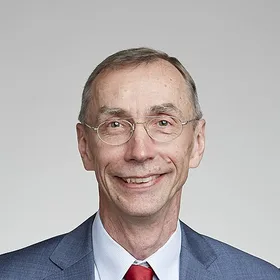
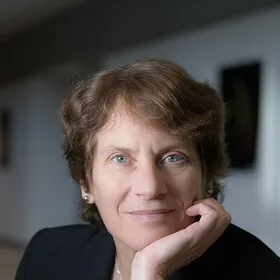
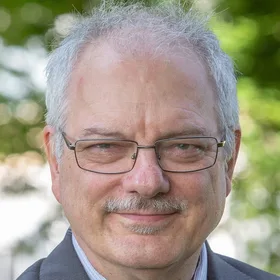
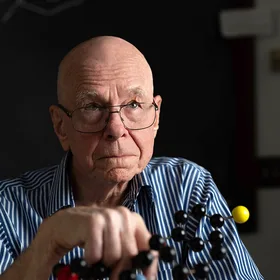
Pääbo found ways to read DNA from very old bones. His team decoded the Neanderthal genome. From one small finger bone, they also found a lost group of humans, the Denisovans.
Why it matters
Most people alive today carry a little Neanderthal DNA. Some of it still affects our health, like how our body fights infection.
The official reason
"for his discoveries concerning the genomes of extinct hominins and human evolution"
The long road
25years from the first Neanderthal DNA (1997) to the prize
1997Reads a piece of Neanderthal DNA for the first time.
2010First draft of the Neanderthal genome. The Denisovans are found.
Old DNA falls apart.After death, DNA breaks into tiny bits. After thousands of years, only a trace is left, mixed with DNA from germs and from people.
A first look.Pääbo worked in super-clean labs. He read DNA from mitochondria, tiny cell parts with thousands of copies. A 40,000-year-old bone held a piece unlike anyone alive.
The whole genome.New machines read many short pieces at once. His team threw out stray modern DNA and fitted the rest together: in 2010, the first Neanderthal genome.
A finger bone, a new people.A tiny finger bone from a cave in Siberia held DNA unlike any known. Not us, not Neanderthal: a lost group of humans, the Denisovans.
Cousins met.About 70,000 years ago, our ancestors spread out of Africa. They met Neanderthals in the west and Denisovans in the east, and had children together.
They live on in us.People from Europe or Asia carry 1 to 4 percent Neanderthal DNA. Some of it affects how we fight germs. A Denisovan gene helps Tibetans live high up.
1 · The puzzle
Old DNA falls apart.
After death, DNA breaks into tiny bits. After thousands of years, only a trace is left, mixed with DNA from germs and from people.
A white model made to show the idea. Real DNA is far too small to see, and a whole genome has billions of letters. The letters, bits and figures are sketches.
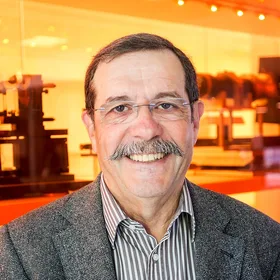
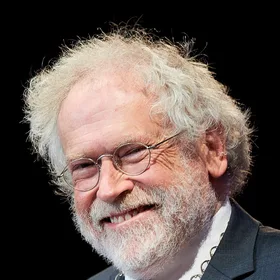
They proved quantum entanglement is real, using light.
Alain Aspect, John Clauser, Anton Zeilinger · Shared by three people · 50 year wait
What they did
Two entangled particles act as one, even when far apart. Einstein found that hard to believe. Clauser, then Aspect, tested it with pairs of light particles. Zeilinger used entanglement to teleport a particle's state from one place to another.
Why it matters
Their work started the field of quantum information: quantum computers, quantum networks and new kinds of secret codes.
The official reason
"for experiments with entangled photons, establishing the violation of Bell inequalities and pioneering quantum information science"
The long road
50years from Clauser's first test (1972) to the prize
Grey until you look.Some pairs of particles are entangled: linked as one. Neither has a set color until someone looks. Look at one, and the other shows the opposite.
Or a hidden note?Or did each ball carry a hidden note saying what to show? In 1964 John Bell found a test to tell the two ideas apart.
The first real test.Clauser sent pairs of light particles from calcium atoms to two filters. The pairs agreed more often than any hidden note allows. Quantum physics won.
No way to cheat.Could the setup somehow tip off the light? Aspect switched the filters while the light was already flying, in billionths of a second. The result held.
Teleporting a state.Zeilinger's team used an entangled pair to move one particle's state onto another, far away. The first one loses it. The far one gets it.
Quantum networks.Entangled light now travels through tens of kilometres of fibre, and from a satellite to the ground. It is a base for quantum computers and secret codes.
1 · The puzzle
Grey until you look.
Some pairs of particles are entangled: linked as one. Neither has a set color until someone looks. Look at one, and the other shows the opposite.
A low-poly model made to show the idea. The gems, the score bar and its limit line are sketches, not real data, and real tests sent huge numbers of light particles.
Click chemistry: snapping molecules together like buckles.
Carolyn Bertozzi, Morten Meldal, K. Barry Sharpless · Shared by three people · 20 year wait
What they did
Sharpless and Meldal each found a reaction that snaps two molecules together fast and clean, using copper. Bertozzi found a way to do it without copper, so it works inside living things without harming them.
Why it matters
It is used to make drugs and new materials, and to track molecules inside cells. It was Sharpless's second chemistry prize. He also won in 2001.
The official reason
"for the development of click chemistry and bioorthogonal chemistry"
The long road
20years from the copper click reaction (2002) to the prize
2001Sharpless names the idea: click chemistry.
2002Meldal and Sharpless each publish the copper click reaction.
2004Bertozzi's copper-free version works in living cells.
Building molecules is slow.Chemists often build big molecules in many steps. Each step makes unwanted leftovers that must be cleaned away. Sometimes hardly anything is left at the end.
Just click.Sharpless said: build with small parts that really want to join, like the two halves of a buckle. Fast, simple, few leftovers. He called it click chemistry.
Copper makes it snap.Each found the same star reaction on his own. Meldal found it by surprise. With copper, an azide and an alkyne snap into a ring, joining two molecules.
Clicks inside living cells.Copper harms living things. Bertozzi gave cells sugars with an azide handle. Then a bent ring, carrying a glowing tag, clicked on with no copper at all.
Aiming at cancer.Click chemistry now helps make new drugs and materials. Researchers are trying it against cancer: an antibody finds a tumour, then a tag clicks onto it.
1 · The problem
Building molecules is slow.
Chemists often build big molecules in many steps. Each step makes unwanted leftovers that must be cleaned away. Sometimes hardly anything is left at the end.
A cartoon made to show the idea. Real molecules are far too small to see, and the buckles stand in for chemical groups.
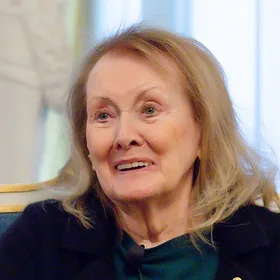
A shop and a café.Annie Ernaux was born in 1940 and grew up in Yvetot, a small town in Normandy. Her parents ran a café and grocery there.
Leaving home behind.School and books took her into another world. She felt she was betraying where she came from, and felt shame. That gap runs through her books.
Plain words, like a knife.Her breakthrough tells her father's life in under a hundred pages. Plain words, nothing fancy. She has said she uses language like a knife.
Her own life, told straight.A Woman's Story is about her mother. Happening tells of an illegal abortion she had at 23. She writes what is hardest to say out loud.
Everyone's memory.The Years mixes her life with the songs, news and photos of her time. She writes "she", not "I". It has been called the first collective autobiography.
One life holds many.Her books show that one private life also holds the story of a whole society. Many readers find their own families in her pages.
1 · Yvetot, Normandy
A shop and a café.
Annie Ernaux was born in 1940 and grew up in Yvetot, a small town in Normandy. Her parents ran a café and grocery there.
A toy theater made to show the idea. The titles are her real books, with the year each first came out in French.
Three voices for human rights in Belarus, Russia and Ukraine.
Ales Bialiatski, Memorial, Center for Civil Liberties · Shared by one person and two groups · 35 year wait
What they did
Bialiatski founded Viasna, a human rights group in Belarus. He was in prison when he won. Memorial recorded the crimes of the Soviet state, and Russia shut it down. The Center for Civil Liberties records war crimes in Ukraine.
Why it matters
During the war in Ukraine, these groups keep a record of the truth, so it can't be wiped away.
The official reason
"The Peace Prize laureates represent civil society in their home countries. They have for many years promoted the right to criticise power and protect the fundamental rights of citizens. They have made an outstanding effort to document war crimes, human right abuses and the abuse of power. Together they demonstrate the significance of civil society for peace and democracy."
The long road
35years from Memorial's founding (1987) to the prize
1987Memorial is founded in the Soviet Union.
1996Bialiatski founds Viasna in Belarus.
2007The Center for Civil Liberties is founded in Kyiv.
2021Bialiatski is jailed. A Russian court orders Memorial shut.
Names that must not be lost.Memorial began in 1987 in the Soviet Union. Andrei Sakharov helped found it. It recorded the victims of Stalin's time, so they would not be forgotten.
Ordered shut.It also recorded crimes in Chechnya's wars. In 2021 Russia's top court ordered it shut. Its chairman said: "Nobody plans to give up."
Spring in Belarus.In 1996 Belarus's president took near total power. Ales Bialiatski founded Viasna, which means Spring. It helped jailed protesters and their families.
Jailed, again and again.He was jailed from 2011 to 2014. In 2021 he was jailed again, with no trial. He was still in prison when he won the prize.
Recording a war.The Center for Civil Liberties began in Kyiv in 2007. Since Russia invaded in 2022, it records war crimes against ordinary people, so the guilty can face justice.
A record that lasts.Jails and court orders did not stop them. Their records keep the truth safe, and show why free voices matter for peace.
1 · Memorial, 1987
Names that must not be lost.
Memorial began in 1987 in the Soviet Union. Andrei Sakharov helped found it. It recorded the victims of Stalin's time, so they would not be forgotten.
A paper pop-up book made to show the idea. The maps are simplified, and the cards stand in for many thousands of real records.
Why banks matter, and why bank runs make crises worse.
Ben Bernanke, Douglas Diamond, Philip Dybvig · Shared by three people · 39 year wait
What they did
Diamond and Dybvig showed why banks are useful, and why fear can make everyone take their money out at once. Bernanke showed that bank failures turned the slump of the 1930s into the Great Depression.
Why it matters
Their work shaped how governments fought the 2008 crisis. Bernanke ran the US central bank then.
The official reason
"for research on banks and financial crises"
The long road
39years from their 1983 papers (1983) to the prize
1983Diamond and Dybvig's bank run model. Bernanke's paper on banks in the Great Depression.
2006Bernanke becomes head of the US Federal Reserve.
Two wishes that clash.Savers want their money back any day. A farm or a factory needs a loan for many years. How can both get what they want?
The bank in the middle.A bank takes in many people's savings and lends them out for years. Savers rarely all need cash at once, so a little cash on hand is enough.
A rumour starts a run.If people fear the bank will fail, they all rush to get their money. The cash runs out, loans are sold cheap, and even a sound bank can fall.
A promise stops the panic.If the government guarantees people's savings, nobody needs to rush. The run never starts, so in theory the promise never has to be paid.
Why the 1930s were so bad.US banks halved in number in three years, and factory output fell 46 percent. Bernanke showed failing banks were a main cause of the Great Depression.
Crises kept smaller.In the 2008 crisis, Bernanke ran the US central bank and put these lessons to work. Most countries now guarantee people's savings.
1 · The puzzle
Two wishes that clash.
Savers want their money back any day. A farm or a factory needs a loan for many years. How can both get what they want?
A pencil sketch made to show the idea. The people, coins and buildings are made up; the 1930s numbers are real.