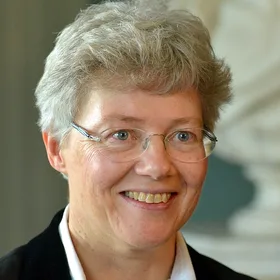
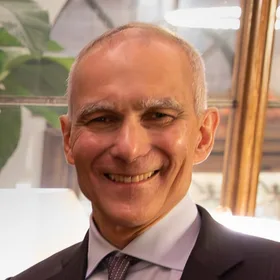
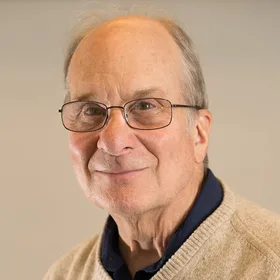
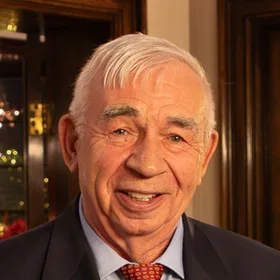
Katalin Karikó, Drew Weissman · Shared by two people · 18 year wait
What they did
mRNA tells cells which protein to make. But mRNA made in a lab set off alarms in the body. Karikó and Weissman found that changing one of its building blocks quiets those alarms.
Why it matters
This let mRNA vaccines against COVID-19 be made in under a year. Billions of doses were given.
The official reason
"for their discoveries concerning nucleoside base modifications that enabled the development of effective mRNA vaccines against COVID-19"
The long road
18years from their key paper (2005) to the prize
1997Karikó and Weissman meet at the University of Pennsylvania.
2005They show a changed building block calms the body's alarms.
2020The first mRNA vaccines against COVID-19 are approved.
mRNA is a recipe.Our cells read mRNA like a recipe to make proteins. Since the 1980s, labs could make mRNA in a test tube. Could it be a medicine?
It set off alarms.Lab-made mRNA made the body's guard cells sound the alarm. They treated it like an invader and caused inflammation, like the swelling around a cut. Few people believed in the idea.
Look at the letters.mRNA is written with four letters: A, U, G and C. In our own cells, the letters often carry small chemical changes. Lab-made mRNA had none. So they made mRNA with changed letters.
The alarm went quiet.With changed letters, the alarm almost stopped. In 2008 and 2010, they showed cells also made much more protein from it.
Vaccines in record time.When COVID-19 struck in 2020, two vaccines used mRNA with changed letters. It carried the recipe for the virus's outer protein, so the body could learn it. Both were approved in December 2020.
1 · The idea
mRNA is a recipe.
Our cells read mRNA like a recipe to make proteins. Since the 1980s, labs could make mRNA in a test tube. Could it be a medicine?
A white model made to show the idea. Real mRNA has thousands of letters, and in a vaccine it travels inside tiny bubbles of fat. The blue rings stand for the small changes, and sizes are a sketch.
Flashes of light short enough to watch electrons move.
Pierre Agostini, Ferenc Krausz, Anne L’Huillier · Shared by three people · 36 year wait
What they did
Electrons move in attoseconds: billionths of a billionth of a second. L'Huillier found that a laser shone through gas gives off overtones of light. Agostini and Krausz used that to make flashes of light that short.
Why it matters
Now scientists can watch electrons inside atoms and molecules. It may lead to faster electronics and new medical tests.
The official reason
"for experimental methods that generate attosecond pulses of light for the study of electron dynamics in matter"
The long road
36years from L'Huillier's discovery (1987) to the prize
1987L'Huillier finds the overtones of light.
2001Agostini makes a train of tiny flashes. Krausz makes a single one.
Too fast to see.A photo of something fast needs an even faster flash. Electrons in atoms move in attoseconds. No flash was that short, so photos came out blurred.
A billionth of a billionth.That is an attosecond. A second holds as many of them as seconds have passed since the universe began.
Light with overtones.In 1987, Anne L'Huillier shone an infrared laser through a noble gas. Out came overtones: shorter light waves, like the extra notes on a guitar string.
An electron's round trip.The laser pulls an electron out of its atom, then pushes it back. As it lands, it gives off a burst of ultraviolet light.
Add the waves, get flashes.Where the overtones' peaks line up, they add into tiny flashes. Agostini timed a train of them, 250 attoseconds each. Krausz picked out one flash, 650 attoseconds long.
Now we can watch electrons.Flashes this short take sharp snapshots of moving electrons. This may one day help build faster electronics and new medical tests.
1 · The problem
Too fast to see.
A photo of something fast needs an even faster flash. Electrons in atoms move in attoseconds. No flash was that short, so photos came out blurred.
A low-poly model made to show the idea. Real electrons do not go round in neat circles, real flashes come from many atoms at once, and the sizes and wave shapes are sketches.
Quantum dots: crystals so tiny that their size sets their color.
Moungi Bawendi, Louis Brus, Aleksey Yekimov · Shared by three people · 42 year wait
What they did
Yekimov made tiny crystals in colored glass. Brus found the same effect in crystals floating in liquid. Bawendi found a way to make them neatly, all the same size.
Why it matters
Quantum dots light up TV screens and LED lamps, and help doctors see tissue.
The official reason
"for the discovery and synthesis of quantum dots"
The long road
42years from Yekimov's glass crystals (1981) to the prize
1981Yekimov finds that tiny crystals' size changes the glass's color.
Crystals so tiny that their size sets their color.
One mix, two colors.Glassmakers knew a puzzle. The same cadmium mix could make glass yellow or red, depending on how it was heated and cooled.
Tiny crystals inside.In glass with copper chloride, Aleksey Yekimov found tiny crystals, 2 to 30 nanometers wide. The smaller they were, the bluer the light they soaked up.
The same in a liquid.Louis Brus made tiny crystals in a liquid. As they grew on the bench, their light changed. Small ones soaked up bluer light than big ones.
Size sets the color.A quantum dot holds just a few thousand atoms. Its electrons are squeezed for room. The smaller the dot, the tighter the squeeze, and the bluer its light.
All the same size.Early dots came in mixed sizes, with flaws. Moungi Bawendi's team squirted the ingredients into a hot liquid. Tiny crystals started all at once and grew evenly.
Colors on your screen.In QLED screens, blue light hits quantum dots that turn some of it red or green. Dots also tint LED lamps, and may help surgeons find tumors.
1 · An old puzzle
One mix, two colors.
Glassmakers knew a puzzle. The same cadmium mix could make glass yellow or red, depending on how it was heated and cooled.
A cartoon made to show the idea. Real quantum dots are a few millionths of a millimeter wide, far too small to see one by one.
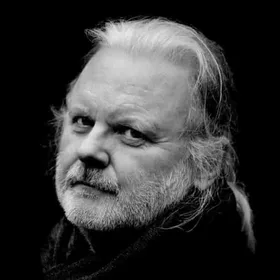
A Norwegian writer who puts the unsayable into words.
Jon Fosse · One winner · 40 year wait
What they did
Fosse writes plays, novels and poems in Nynorsk, a less-used form of Norwegian. His work is simple and slow. It is about fear, faith and being close to others.
Why it matters
His plays are staged all over the world.
The official reason
"for his innovative plays and prose which give voice to the unsayable"
The long road
40years from his first novel (1983) to the prize
1983First novel: Red, Black (Raudt, svart).
2022A New Name is shortlisted for the International Booker Prize.
A writer of the windy coast.Jon Fosse was born in 1959 in Haugesund, on Norway's west coast. He writes in Nynorsk, used by only 10 to 15 in 100 Norwegians.
Books of every kind.His first novel, Raudt, svart (Red, Black), came out in 1983. Then came plays, more novels, poems, essays and children's books.
Few words, long pauses.In The Name (1995), a young pregnant girl waits for her baby's father, who is late. People say simple, everyday things. The pauses between the words carry the fear.
On stages everywhere.A 1999 Paris staging of his play Someone Is Going to Come was his big break in Europe. His plays have since been on over a thousand stages.
1,250 pages, one long flow.In Septology, an old painter, Asle, talks to himself for seven days, with no sentence breaks. His painting: a purple stroke and a brown one, in a cross.
Saying the unsayable.The prize praised his plays and prose, which “give voice to the unsayable”. In the plainest words, he writes about fear and hope, death and God.
1 · Norway's west coast
A writer of the windy coast.
Jon Fosse was born in 1959 in Haugesund, on Norway's west coast. He writes in Nynorsk, used by only 10 to 15 in 100 Norwegians.
A toy theater made to show the idea. The stage, the pages and the painting are our sketches, not scenes from a real staging or book.
An Iranian woman fighting for women's rights, from prison.
Narges Mohammadi · One winner · 20 year wait
What they did
Mohammadi has fought for women's rights and against the death penalty in Iran for decades. She has been arrested 13 times. She was in prison when she won, so her children took the prize for her.
Why it matters
The prize came a year after the protests over Mahsa Amini's death, under the call “Woman, Life, Freedom.”
The official reason
"for her fight against the oppression of women in Iran and her fight to promote human rights and freedom for all"
The long road
20years from joining the Defenders of Human Rights Center (2003) to the prize
2003Joins the Defenders of Human Rights Center in Tehran.
2022Protests sweep Iran after Mahsa Amini dies in police custody.
She speaks up.As a physics student in the 1990s, Narges Mohammadi stood up for women's rights. In 2003 she joined the Defenders of Human Rights Center in Tehran.
Jailed for helping.She was first jailed in 2011, for helping jailed activists and their families. Out on bail, she fought the death penalty. In 2015 she was arrested again.
13 arrests, 31 years.By 2023, Iran's rulers had arrested her 13 times and convicted her five times. They sentenced her to 31 years in prison and 154 lashes.
Woman, Life, Freedom.Mahsa Jina Amini, a young Kurdish woman, was killed in the custody of Iran's morality police. Hundreds of thousands protested under the words “Woman, Life, Freedom”.
Her voice gets out.From Evin prison in Tehran, she backed the protests. She smuggled out an article. The New York Times printed it a year after Amini was killed.
Her children speak for her.She was still in prison when she won the 2023 Peace Prize. In Oslo, her teenage children, Ali and Kiana, read out her speech.
1 · Tehran, 2003
She speaks up.
As a physics student in the 1990s, Narges Mohammadi stood up for women's rights. In 2003 she joined the Defenders of Human Rights Center in Tehran.
A paper pop-up book made to show the idea. The people are simple figures, not portraits, and the places are sketches.
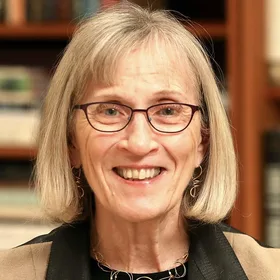
Goldin dug through two centuries of US records on women and work. She found that today's pay gap is mostly between men and women in the same job. It grows after the first child.
Why it matters
It shows that closing the gap takes more than new laws. It is about how jobs reward long, fixed hours.
The official reason
"for having advanced our understanding of women’s labour market outcomes"
The long road
33years from her book on the gender gap (1990) to the prize
1990Publishes Understanding the Gender Gap.
2002With Lawrence Katz, shows how the pill changed women's careers.
Why women earn less, found in 200 years of records.
The missing workers.Old US records often listed a married woman's job as just “wife”. Yet many worked on farms or in family shops. Claudia Goldin dug through 200 years of records to count them.
Down, then up.As factories replaced farms in the 1800s, fewer married women worked for pay. As offices and shops grew in the 1900s, more did. Growth alone did not bring women into work.
Plans change everything.With the pill, young women could plan when to have children. With Lawrence Katz, Goldin showed they married later, and more studied law, medicine and economics.
It opens with the first child.Today most of the pay gap is between men and women in the same job. Their pay starts out close. When the first child arrives, hers falls behind and stays behind.
Jobs that want you always on.Many jobs pay extra for being on call at all hours. Mothers often do more of the child care. Equal pay laws exist, yet the gap stays. More flexible work may help.
1 · The archives
The missing workers.
Old US records often listed a married woman's job as just “wife”. Yet many worked on farms or in family shops. Claudia Goldin dug through 200 years of records to count them.
A pencil sketch made to show the idea. The curves show the shape of Goldin's findings, not her exact numbers.