Physics 2021 · Announced Oct 5
They made sense of complex systems, from the climate to messy materials.
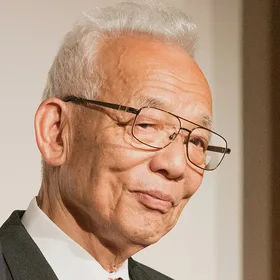
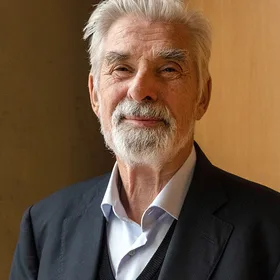
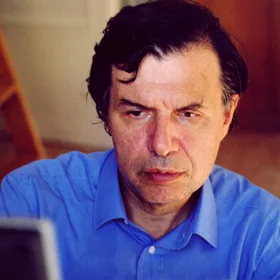
Syukuro Manabe, Klaus Hasselmann, Giorgio Parisi · Half shared by Manabe and Hasselmann, half to Parisi · 54 year wait
What they did
Manabe built early computer models of Earth's climate. They showed that more carbon dioxide warms the planet. Hasselmann linked weather to climate and found ways to spot humans' fingerprints on warming. Parisi found hidden order in messy, random systems.
Why it matters
Their work is the base of today's climate forecasts. Parisi's ideas are used in fields from physics to brain science and machine learning.
The official reason
"for the physical modelling of Earth’s climate, quantifying variability and reliably predicting global warming" (Syukuro Manabe and Klaus Hasselmann)
"for the discovery of the interplay of disorder and fluctuations in physical systems from atomic to planetary scales" (Giorgio Parisi)
The long road
- 1967Manabe's model shows more carbon dioxide warms the planet.
- 1976Hasselmann shows how fast weather adds up to slow climate change.
- 1979Parisi finds hidden order in disordered magnets.
- 2021Nobel Prize in Physics.
See the idea · 80-second film, with sound
Why we can trust climate models, and the order hidden in a mess.
- A column of air. Manabe built a computer model of one column of air, 40 km tall. Sunlight comes in, heat goes out, warm air rises.
- Double the carbon dioxide. He doubled the carbon dioxide. The ground warmed over 2 °C, and the top got colder. So the gas was the cause, not the sun.
- Weather is the dog. Weather jumps about. Can a climate model still work? Hasselmann said yes. A dog darts about on a walk, but you can see where the walker goes.
- Who left the prints? The sun, volcanoes and our gases each change the air in their own way. Hasselmann found how to tell them apart. The warming matches ours.
- Magnets that can't agree. Spin glass is a metal full of tiny magnets. Some pairs want to match, others to clash, so one is always unhappy. Parisi found hidden order there.
- From climate to flocks. Their work is the base of today's climate forecasts. Parisi's ideas are used in brain science, machine learning, and the study of starling flocks.
1 · Manabe, 1960s
A column of air.
Manabe built a computer model of one column of air, 40 km tall. Sunlight comes in, heat goes out, warm air rises.
A low-poly model made to show the idea. Real climate models split the whole planet into many columns, and the fingerprints are found with careful math, not by eye. Sizes and colours are a sketch.