Medicine 2021 · Announced Oct 4
How we feel heat, cold and touch.
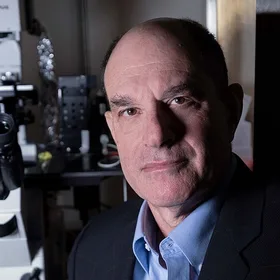
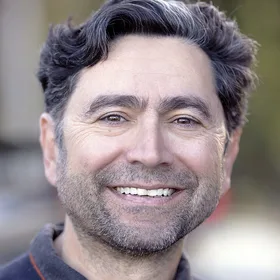
David Julius, Ardem Patapoutian · Shared by two people · 24 year wait
What they did
Julius used capsaicin, the hot part of chili peppers, to find the nerve sensor that feels heat. Patapoutian found Piezo1 and Piezo2, the sensors that feel pressure and touch.
Why it matters
These sensors help explain how we feel pain and know where our body is. Drug makers use them to look for new pain medicines.
The official reason
"for their discoveries of receptors for temperature and touch"
The long road
- 1997Julius finds TRPV1, the sensor for heat and chili.
- 2002Julius and Patapoutian each find TRPM8, a sensor for cold.
- 2010Patapoutian finds the touch sensors Piezo1 and Piezo2.
- 2021Nobel Prize in Physiology or Medicine.
See the idea · 77-second film, with sound
How your nerves feel heat, cold and touch.
- How do nerves feel heat? Touch a hot pan and you pull back fast. But how does a nerve feel heat in the first place? No one knew.
- Follow the chili. Chili burns because of capsaicin. Julius gave cells that ignore chili one gene each, from millions. One gene made them react.
- Chili or heat opens it. It makes TRPV1, a tiny gate in the nerve. Capsaicin opens it, and so does heat above 40 °C. Then a signal fires.
- Mint finds the cold gate. Mint feels cool because of menthol. Working apart, both men used it to find TRPM8, a gate that opens in the cold.
- Poke, poke, silence. His cells sent a signal when poked. He switched off 72 genes, one by one. With one off, the poke went silent. He named it Piezo1, from the Greek for pressure.
- How we sense the world. A second gate, Piezo2, lets us feel touch and sense where our body is. These gates guide the hunt for new pain treatments.
1 · The puzzle
How do nerves feel heat?
Touch a hot pan and you pull back fast. But how does a nerve feel heat in the first place? No one knew.
A white model made to show the idea. The real gates are single proteins, far too small to see, each search took years of work, and the genes, cells and sizes are sketches.