Chemistry 2024 · Announced Oct 9
Designing new proteins, and predicting their shapes with AI.
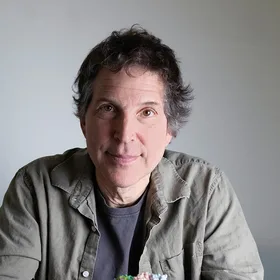
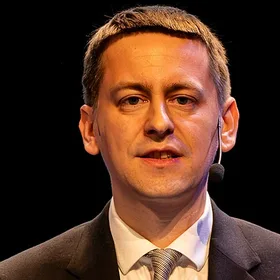
David Baker, Demis Hassabis, John Jumper · Half to Baker, half shared by Hassabis and Jumper · 21 year wait
What they did
Baker's team designs brand-new proteins on computers. Hassabis and Jumper built AlphaFold, an AI that predicts a protein's shape from its recipe.
Why it matters
Proteins do almost all the work in our bodies. AlphaFold has predicted the shapes of nearly all 200 million known proteins.
The official reason
"for computational protein design" (David Baker)
"for protein structure prediction" (Demis Hassabis and John Jumper)
The long road
- 2003Baker's team designs a protein not found in nature.
- 2020AlphaFold 2 wins a world contest for predicting protein shapes.
- 2024Nobel Prize in Chemistry.

See the idea · 77-second film, with sound
The shape of life's tiny machines.
- Proteins are tiny machines. They do almost all the work in our bodies. Each one starts as a chain of small building blocks, like beads on a string.
- The chain folds up. It folds by itself into a 3D shape. The shape decides the job: carry oxygen, fight germs, move muscles.
- A 50-year puzzle. Can you tell the shape from the chain alone? Scientists tried for 50 years. In the lab, finding one shape could take years.
- AI cracks the puzzle. In 2020, Hassabis and Jumper's AI, AlphaFold 2, predicted shapes from the chain alone. It has now predicted nearly all 200 million known proteins.
- Baker works backward. He starts with a new shape, then finds a chain that folds into it. In 2003, his team made a protein not found in nature.
- New shapes, new tools. Knowing and designing shapes helps make new medicines, vaccines and tiny sensors.
1 · Proteins
Proteins are tiny machines.
They do almost all the work in our bodies. Each one starts as a chain of small building blocks, like beads on a string.
A cartoon made to show the idea. Real proteins have hundreds of building blocks, of 20 kinds.